We do not diagnose disease or recommend a treatment protocol or dietary supplement for the treatment of disease. You should share this information with your physician who can determine what nutrition and disease treatment regimen is best for you. Ask your physician any questions you have concerning your medical condition. You can search this site or the web for topics of interest that I may have written (use Dr Simone and topic).
“We provide truthful information without emotion or influence from the medical establishment, pharmaceutical industry, national organizations, special interest groups or government agencies.” Charles B Simone, M.MS., M.D.
SHARED CLINICAL DECISION-MAKING: When Medical Uncertainty Shifts the Burden of Complex Health Decisions onto Patients
https://tinyurl.com/5b9k3nwj
https://www.simonesuperenergy.com/wp-content/uploads/2026/03/SHARED-CLINICAL-DECISION-MAKING.wav

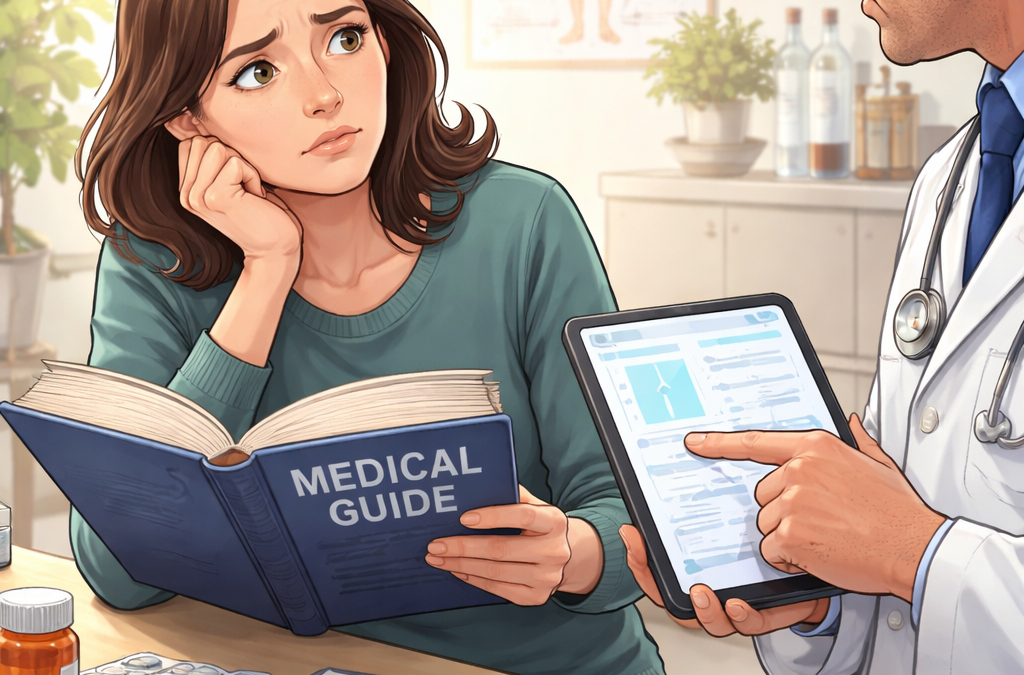
“Shared clinical decision-making” is a model promoted by organizations such as the Centers for Disease Control and Prevention and used by the Advisory Committee on Immunization Practices in which a physician and patient jointly decide whether a medical intervention, like the mRNA COVID shot is appropriate rather than applying a universal recommendation to everyone. While the concept is intended to respect patient autonomy and personalize care, it can present several challenges for laypeople.
One concern is that “Shared clinical decision-making” can shift significant responsibility onto patients who may not have the scientific background needed to interpret complex medical evidence. Evaluating issues such as clinical trial design, risk magnitude, or long-term safety often requires specialized training, yet patients may feel they must make the final decision and bear the consequences. At the same time, the information balance remains unequal: clinicians usually control how evidence is presented, what options are emphasized, and how risks and benefits are framed, meaning the discussion can still be influenced by professional assumptions or biases or even financial incentives.
Another issue is that quote “Shared clinical decision-making” is often used when the overall benefit of an intervention varies widely among individuals or when the supporting evidence is limited, evolving, or uncertain. In those situations, the intervention may provide clear benefit for some people but only modest benefit for others. Because typical medical appointments are short, there may also be insufficient time to thoroughly review individualized risks and alternatives, so the “shared” discussion can become brief or simplified. Finally, patients may assume that anything offered by a clinician carries a strong endorsement, even when “Shared clinical decision-making” guidance actually reflects a more nuanced or uncertain evidence base.
Public-health bodies such as the Advisory Committee on Immunization Practices (ACIP), which advises the Centers for Disease Control and Prevention (CDC), generally place vaccines into four practical recommendation tiers. Each tier signals something about how strong the evidence is and how broadly the benefit applies.
1. Routine recommendation has the strongest medical evidence. The vaccine is recommended for nearly everyone in a defined age or population group.
2. Catch-up recommendation. People who missed a routine vaccine at the recommended age should receive it later.
3. Risk-based recommendation. The vaccine is recommended only for people with specific risk factors, like medical conditions, occupational exposure, travel to endemic regions, immune suppression.
4. Shared Clinical Decision-Making has the weakest medical evidence.
In principle, shared clinical decision-making aims to make care more individualized and collaborative. In practice, however, it can place complex judgments about uncertain evidence into the hands of patients who may have limited time, information, or technical expertise to fully evaluate the choices.
© 2026 Charles B Simone, M.MS., M.D.