by Dr Simone | May 11, 2026 | AGING, Anti-Aging, COGNITIVE AGING, DEMENTIA, Dr Simone, Exercise
Aging is often associated with inevitable physical and cognitive decline, but emerging evidence suggests many older adults maintain—or even improve—their function over time. A large longitudinal study published in Yale School of Public Health and reported in the journal Geriatrics found that more than 45% of adults age 65 and older demonstrated improvement in cognitive function, physical function, or both over more than a decade of follow-up.[1]
Researchers identified one major predictor of successful aging: positive beliefs about aging itself. Older adults with more optimistic attitudes toward aging were significantly more likely to improve in cognition and walking speed, a key geriatric “vital sign” strongly associated with disability, hospitalization, falls, and mortality.[1,2]
by Dr Simone | Mar 24, 2026 | Cancer, Charles B SimoneMD, CREATINE, Dehydration, DEMENTIA, Immune System, Myasthenia Gravis (MG), The Simone Report
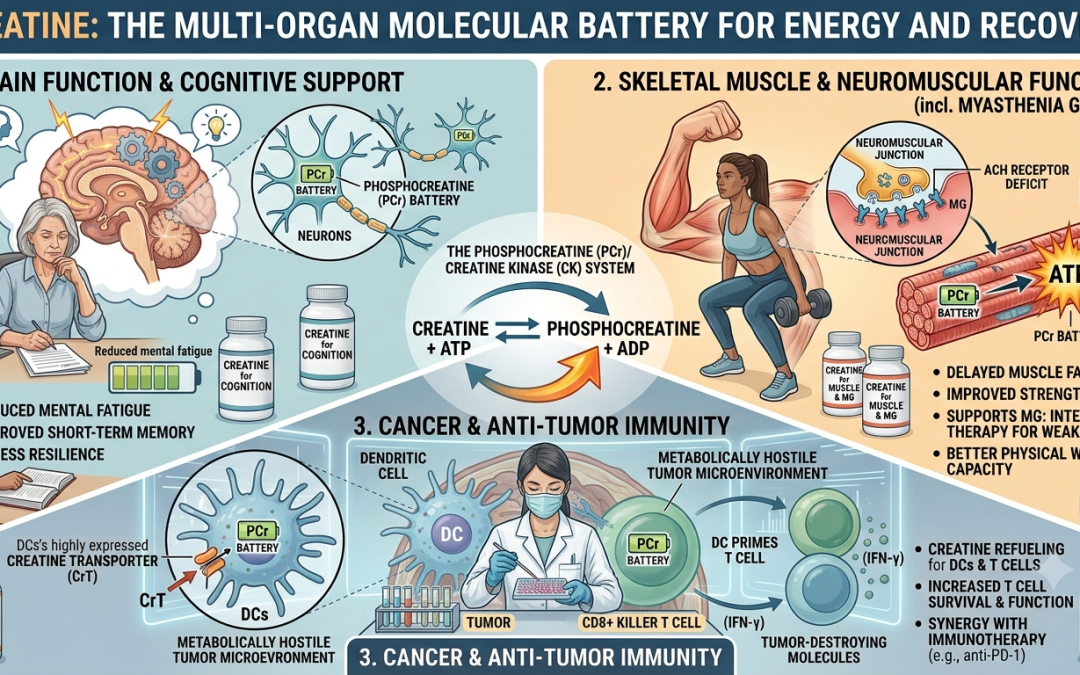
CREATINE BENEFITS THE BRAIN, THE MUSCLE, AND THE IMMUNE SYSTEM. Creatine supplementation may improve cognitive function, improve memory, and boost mood, particularly in individuals experiencing stress or sleep deprivation and for both vegetarians and older adults, as they typically have lower baseline levels of creatine. In patients with Myasthenia Gravis (MG), creatine is considered an “integrative therapeutic” that may help manage muscle weakness and fatigue. Because MG is characterized by a failure of neuromuscular transmission, the muscles themselves often become “energy-starved” or deconditioned. Creatine supplementation is thought to provide a metabolic buffer, helping these compromised muscles maintain ATP (energy) levels during activity.
The role of creatine in oncology and immunology represents an exciting frontier in biomedical research. Research reveals that creatine acts as a critical “molecular battery” that helps the immune system wage war against tumors.
by Dr Simone | Mar 3, 2025 | Breast Cancer, Cardiovascular Disease, COGNITIVE AGING, DEMENTIA, Dr Simone, Microplastics
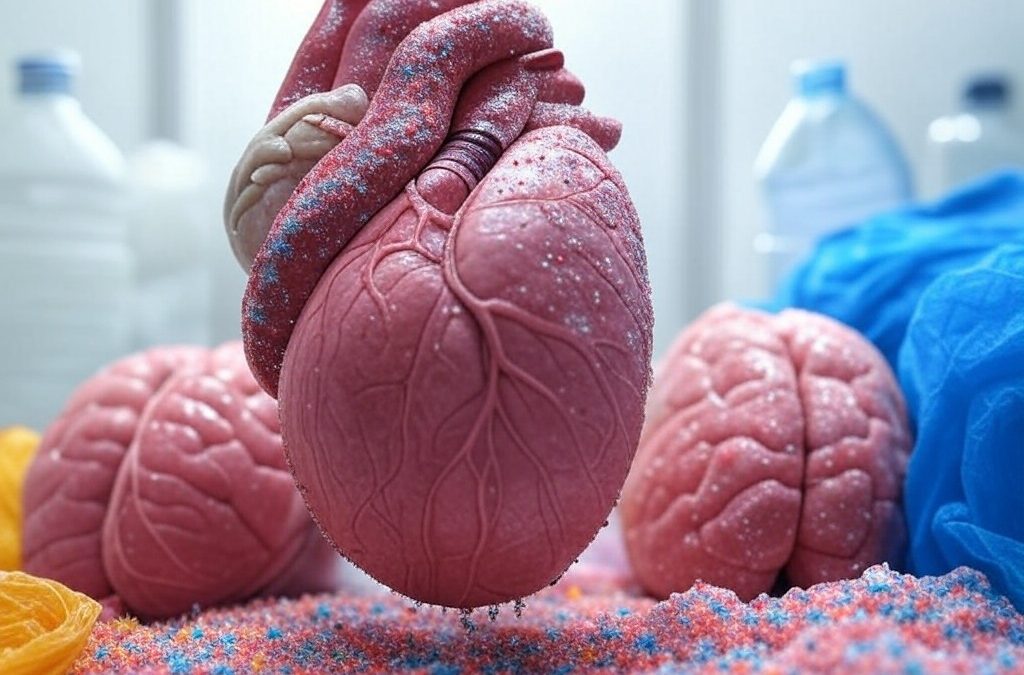
Microplastics are tiny plastic particles, less than 5mm in size, that enter the body and cause harm.

by Dr Simone | Feb 22, 2024 | COGNITIVE AGING, DEMENTIA, MEMORY, VITAMINS
“THERE IS CLEAR EVIDENCE THAT DAILY INTAKE OF MULTIVITAMINS INCREASE COGNITION AND MEMORY AND IS THE EQUIVALENT OF REDUCING COGNITIVE AGING BY 2 YEARS.”