U.S. HEALTH INSURANCE COMPANIES MAKE BILLIONS, WHILE YOU STRUGGLE – BUT HERE IS A PLAN
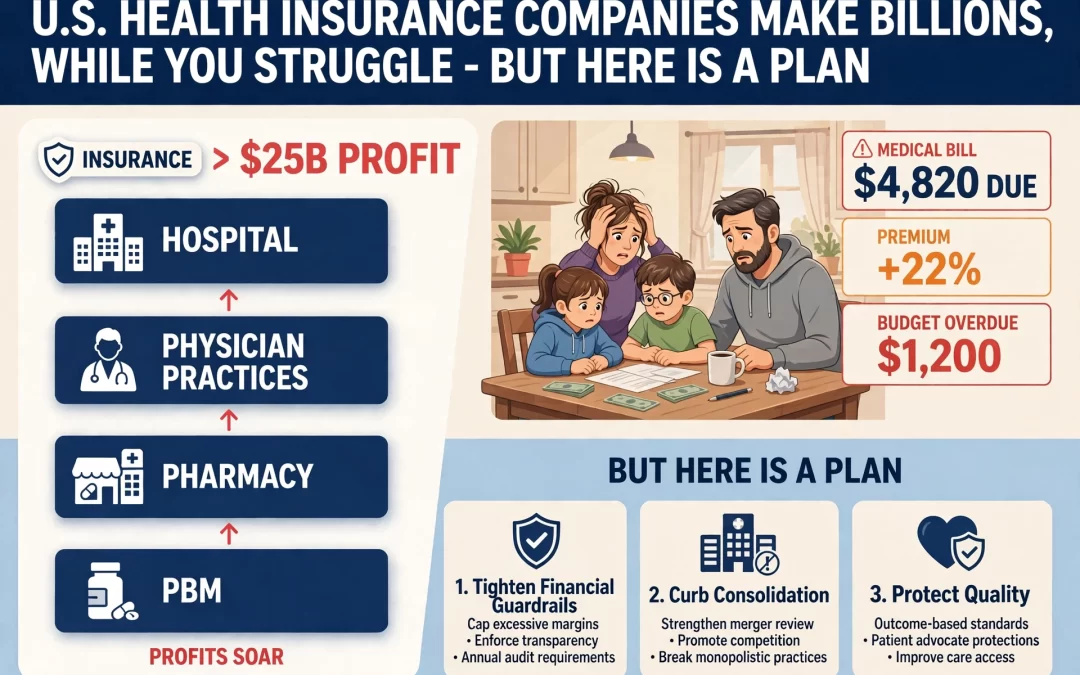
The Crisis: Amid a historic affordability crisis, U.S. for-profit insurance companies posted massive 2025 net incomes — UnitedHealth Group $12.1B, Cigna $6B, Elevance Health $5.7B, Humana $1.2B — totaling over $25B in profit. Employers, facing those rising costs, are forced to either raise employee premiums or suppress wage growth. The result: a medical bill for $4,820, a premium renewal at +22%, and a household budget $1,200 overdue.
The U.S. health-care system puts growing pressure on households and employers through rising premiums, medical bills, and other costs. The insurance companies profit and corporate consolidation are part of the problem—particularly when the same corporate groups own health plans, physician practices, pharmacies, and pharmacy benefit managers, making it harder to see where health-care dollars go.
We can preserve private insurance while strengthening rules that keep premiums and taxpayer dollars focused on patients: stronger oversight of insurer-affiliate payments, limit vertical integration, fairer risk adjustment, real competition, and enforceable staffing and access standards. Affordability and private coverage can coexist if public policy ensures that money intended for essential care supports patients, access, and quality—not simply corporate returns. A consistent federal approach would be more effective than a patchwork of state rules.
The goal: preserve private coverage while making care more affordable and accountable.