We do not diagnose disease or recommend a treatment protocol or dietary supplement for the treatment of disease. You should share this information with your physician who can determine what nutrition and disease treatment regimen is best for you. Ask your physician any questions you have concerning your medical condition.
You can search this site or the web for topics of interest that I may have written (use Dr Simone and topic). “We provide truthful information without emotion or influence from the medical establishment, pharmaceutical industry, national organizations, special interest groups or government agencies.” Charles B Simone, M.MS., M.D.
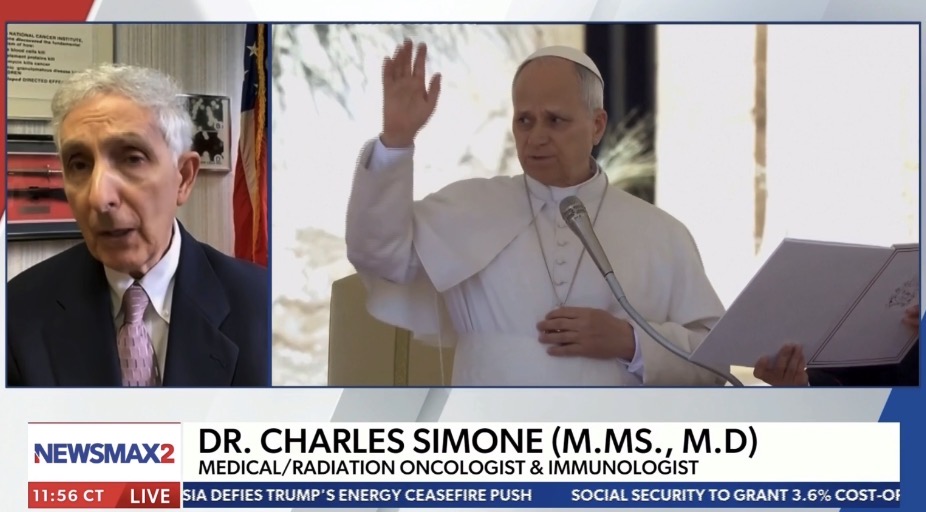
POPE LEO’s LUNG CANCER DIAGNOSIS AND WHAT MAY HAVE CAUSED IT
Pope Leo never smoked, never had medical problems, and is active. We know that 17% of all lung cancers we see are in people who never smoked but who inhaled second-hand smoke between the ages of 3 and 15 years old. I don’t know if he had this exposure.
His brother has multiple myeloma.
One common denominator for both lung cancer and multiple myeloma is RADON exposure.
Dolton, Illinois, Pope Leo’s hometown where he grew up, doesn’t have a reliable published radon reading for the town itself, and there’s no public measurement for Pope Leo XIV’s childhood home. One source places Dolton in EPA Radon Zone 2, meaning a predicted county-average range of 2–4 pCi/L—not a measurement of any particular house. The Illinois average is reported as 5.1 pCi/L. Radon varies from home to home, so only testing can establish a specific home’s level; the EPA recommends fixing a home at 4 pCi/L or above.
Health Risks of Incense Exposure in Churches
Increased Cancer Risk
Long-term exposure to incense smoke has been associated with an increased risk of respiratory cancers, including lung cancer. This risk is particularly significant for individuals who are frequently exposed to incense in poorly ventilated environments, such as churches.
Vulnerable Populations
Catholic priests, like other individuals, may face heightened risks if they have existing respiratory conditions or if they are regularly exposed to incense smoke during services. The smoke from burning incense contains harmful particulate matter and chemicals that can irritate the lungs and potentially lead to chronic health issues.
Recommendations for Mitigation
To reduce the risk of lung cancer and other respiratory problems, the following practices are advisable:
Improve Ventilation: Ensure that incense is burned in well-ventilated areas to minimize smoke accumulation.
Limit Frequency: Reduce the frequency of incense use during services, especially in enclosed spaces.
Choose Quality Incense: Opt for high-quality, natural incense that contains fewer harmful additives.
By implementing these measures, the health risks associated with incense exposure can be significantly mitigated, benefiting both clergy and congregants.
Catholic priests may face health risks from incense smoke exposure, including respiratory issues, asthma exacerbation, and increased risk of lung cancer due to the harmful chemicals present in the smoke. Additionally, long-term exposure can lead to chronic respiratory conditions and cardiovascular problems.
Incense smoke exposure can significantly elevate indoor air pollution levels, often producing fine particulate matter (PM2.5) comparable to or exceeding that of other indoor pollutants, such as those from candles or even traffic exhaust. Regular use of incense in enclosed spaces, like churches, can lead to increased respiratory irritation and health risks, particularly for vulnerable populations.